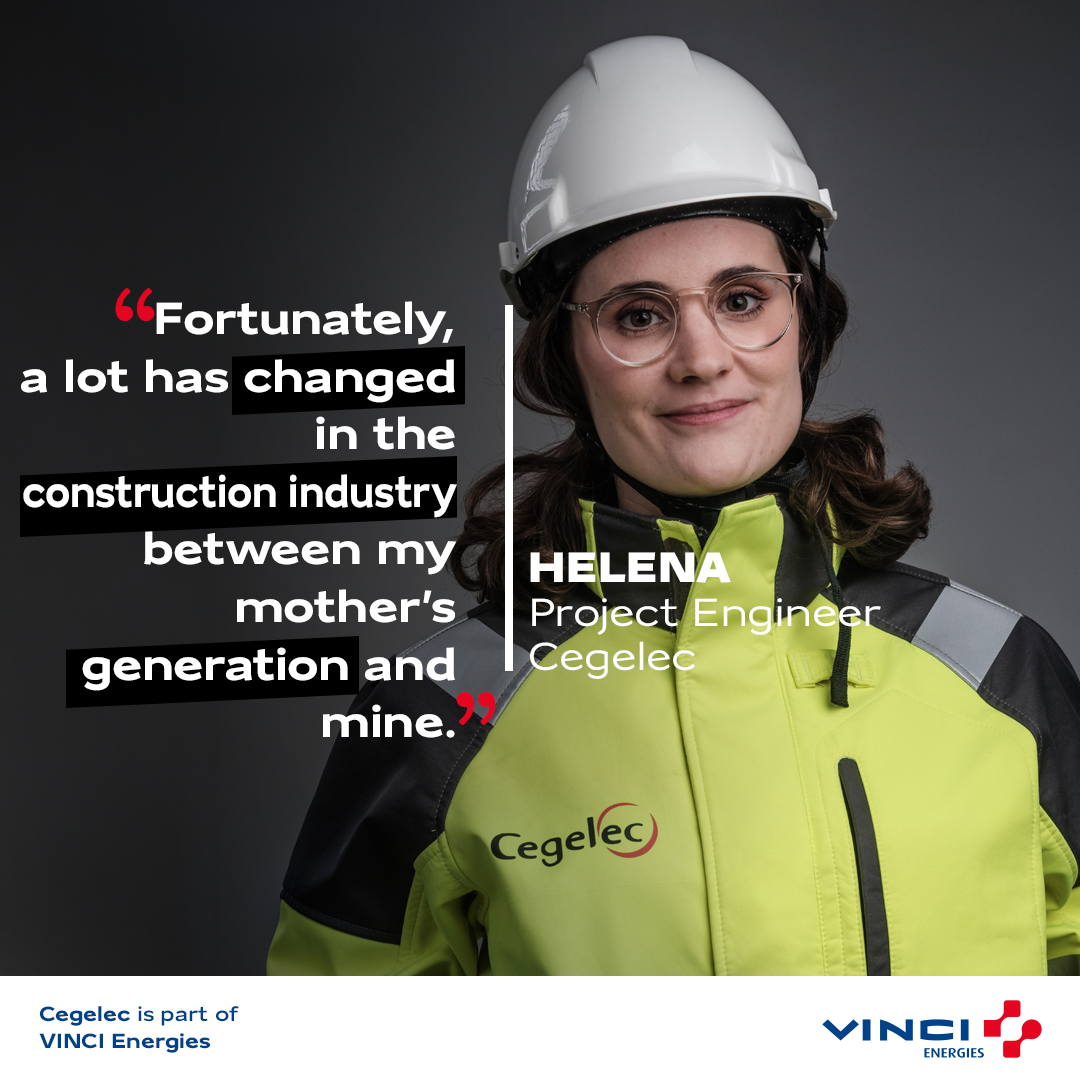

Helena Bogaerts: Project Engineer
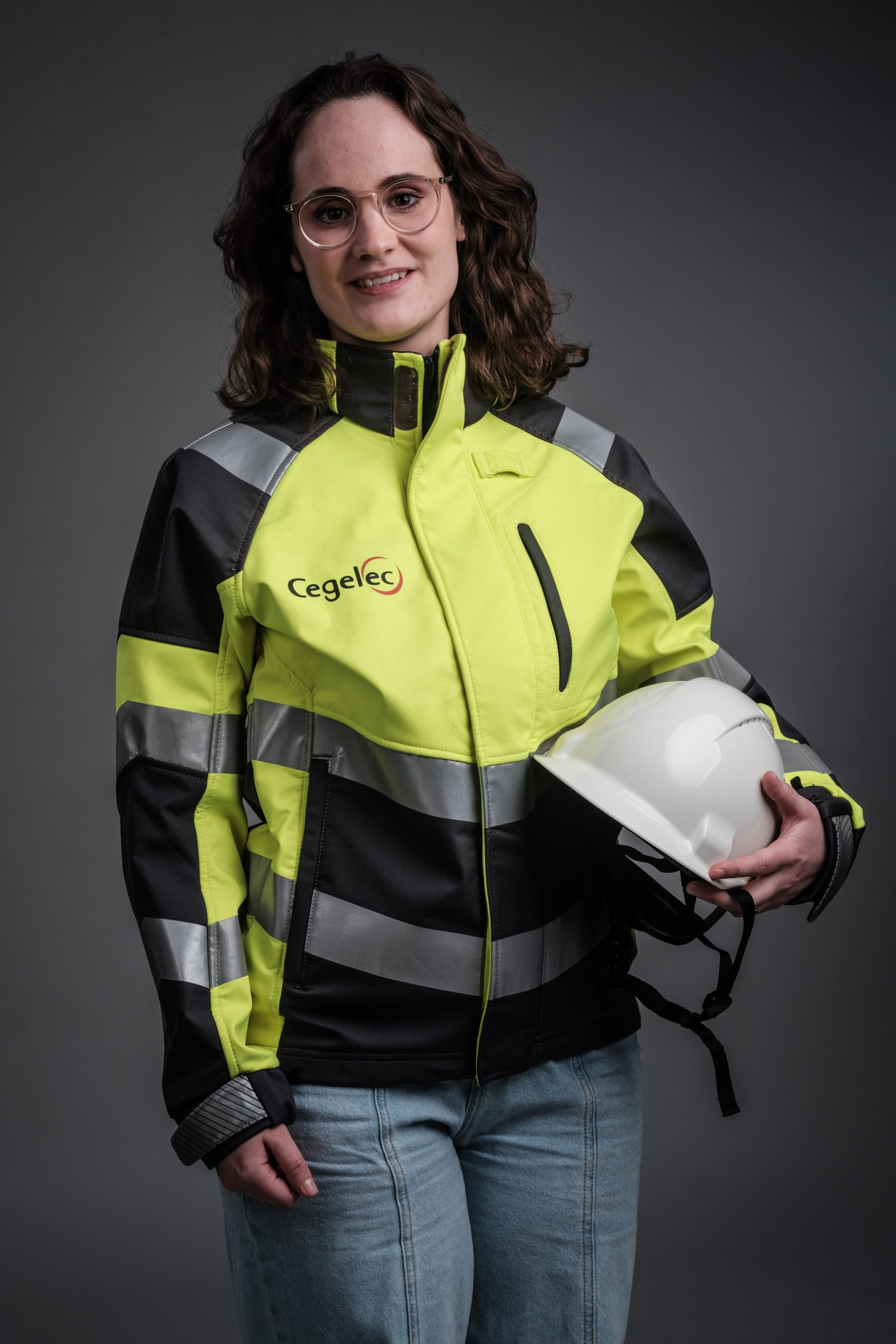
Twenty-five-year-old Helena Bogaerts works as a Project Engineer at Cegelec, within the Fire Solutions division. She designs and calculates sprinkler systems, primarily developing 3D models of sprinkler pipework. Together with the Project Manager, she follows up on projects, stays in close contact with the customer and visits construction sites to check how the plans translate into practice.

“Fortunately, a lot has changed in the construction industry between my mother’s generation and mine.”
- Name: Helena Bogaerts
- Age: 25
- Studies: Master of Science in Civil Engineering Technology (Civil Engineering) (UGent)
- Function: Project Engineer
- Hobbies: Playing the accordion and violin, crocheting, knitting and embroidery
What makes the combination of office work and on-site project follow-up so interesting to you?

Helena: I enjoy working on the technical aspects in the office, but at the same time stay connected to what is happening on site. For me, the added value lies precisely in that interaction. I do not just want to design or calculate a system, but also understand what it looks like in practice and how it is actually implemented. During site meetings, I see how everything comes together on the ground. Sometimes we receive designs from engineering firms that seem logical on paper but are not easily feasible on site. That is where it becomes interesting: working together with the technicians to figure out how something can be done more efficiently or in a smarter way. That is exactly the combination I was looking for: not on-site every day, but also not just behind a screen. This keeps my work varied, hands-on and technically engaging.
You also worked at an engineering firm yourself. How did that experience change your perspective on projects?
Helena: At an engineering firm, you are primarily focused on calculations and what is technically correct on paper. That is important, of course, but I have since learned how big the difference can be between a good design in theory and a good design in practice. Because I am now closer to the execution side, I look at a project much more broadly than I used to. I ask myself different questions today. Not only: is this technically sound? But also: how will this actually be built? Where might problems arise? How can you develop a design so that it really works for the people who have to put it into practice? That makes my perspective much more complete.
Your mother also works in the construction industry. Did that influence your view of the sector?
Helena: Both my parents are engineers, and they taught me that a degree like that opens many doors. At eighteen, you often do not know exactly what you want to do later in life, and that is precisely why that broad foundation appealed to me. My mother also works as a Project Engineer in construction herself, so I never saw the sector as something out of reach. Fortunately, her stories made me realize quickly just how much the industry has changed. When she first started working on a construction site, people reacted with more surprise and did not always listen as readily. When I compare that to what I experience today, I am especially grateful that this evolution has taken place. So far, I have not experienced being treated differently as a woman in the construction sector. What I do think remains important is that we continue to value different ways of working. There is often still a strong emphasis on being assertive and coming across as strong, while there should also be more room for people who stay calm, create structure and listen. Those different perspectives are often exactly what lead to the best solutions. My advice to girls and young women is therefore simple: if you are interested in a technical field, do not let yourself be discouraged. Follow your passion and trust yourself.